
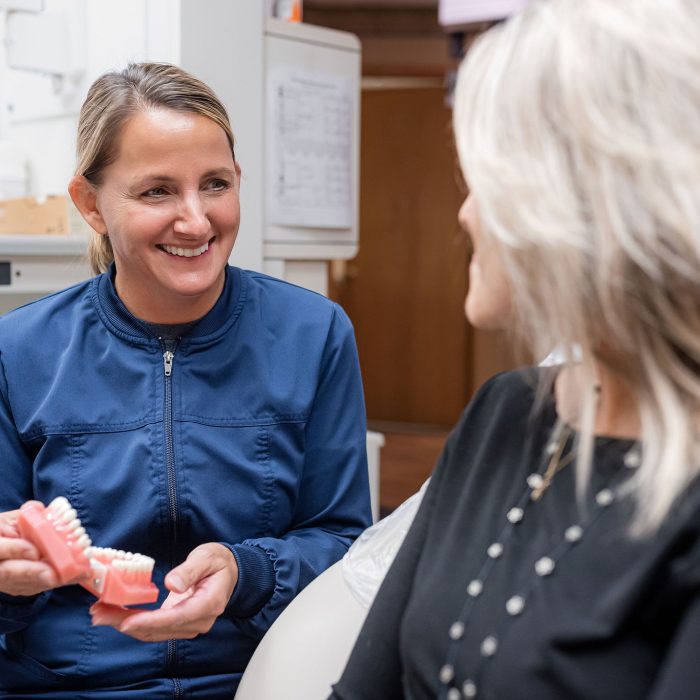
Missing teeth can change the way you eat, speak, and feel about your smile. At Peak Dental Arts, we provide custom dentures in Uniontown, OH, designed for comfort, function, and a natural look. Our dentist, Dr. Amar Vagadia, and our team take time to understand your dental history and goals, then walk you through your options so you feel informed and confident in your decision.
We welcome patients from Uniontown and nearby communities like Green, Hartville, North Canton, and the surrounding Canton and Akron areas. Request an appointment today to schedule your denture consultation.
Types of Dentures We Offer at Our Uniontown Location
We offer several types of dentures to meet the unique needs of our patients. These include:
Partial Dentures
Partial dentures are designed to fill gaps when you still have healthy natural teeth. They help restore chewing and appearance while also supporting the remaining teeth so they are less likely to shift out of place. We custom-craft partial dentures to match the shade and shape of your smile for a natural blend.
Complete Dentures
Complete dentures replace a full arch of missing teeth, upper, lower, or both. A well-made denture can improve your ability to chew and speak and can support your facial shape. We focus on fit, comfort, and a natural look, then fine-tune the details so your denture feels as secure as possible.
Temporary Dentures
Temporary dentures, also called immediate dentures, are placed soon after tooth extraction so you do not have to go without teeth during healing. They act as a functional, protective appliance while your gums change and recover. Once healing is complete, we transition you into your long-term custom denture.
Implant-Supported Dentures
For patients who want added stability, implant-supported dentures attach to dental implants placed in the jawbone. This option can reduce slipping and improve bite strength compared to traditional dentures. If you are curious whether you are a candidate, we can review your goals and discuss the next steps.
The Treatment Timeline, From First Impression to Final Smile
Step 1: Fitting
We start with a comprehensive exam and a conversation about what you want to improve. We review your oral health, discuss denture options, and recommend an approach that fits your needs and comfort.
Step 2: Impressions
Next, we take detailed impressions and measurements. This helps the lab build a denture that matches your anatomy, supports a balanced bite, and looks natural.
Step 3: Fittings
You will return for a try-in so we can check fit, bite alignment, and appearance before final fabrication. This step allows us to adjust the shade, shape, and position of the teeth.
Step 4: Final Delivery
At delivery, we place your finished denture and make careful adjustments to reduce pressure points. We also review how to wear, clean, and care for your appliance. If you need any additional adjustments after you start wearing your dentures, please call us. A comfortable fit matters.
The Benefits of High-Quality Dentures
High-quality dentures do more than fill gaps. They help you chew more comfortably, support clearer speech, and improve the look of your smile.
When dentures fit well, many patients experience fewer sore spots and less day-to-day irritation. A secure, natural-looking fit can also make social situations feel easier, whether you are smiling in photos or talking with friends. Our goal is straightforward: dentures that look natural, feel comfortable, and support your routine.
Caring For Your New Smile
Daily care helps keep your denture clean and helps protect the health of your gums. To extend the life of your dentures, we recommend:
- Handle with care: Dentures can break if dropped. Clean them over a folded towel or a sink with water.
- Brush daily: Gently brush your denture to remove food and plaque. Avoid regular toothpaste, since it can be too abrasive.
- Soak overnight: Many dentures need moisture to keep their shape. Soak them in water or denture solution while you sleep, as instructed.
- Keep your mouth clean: Brush your gums, tongue, and the roof of your mouth with a soft brush each morning to remove bacteria and stimulate tissue.
If you notice a crack, a loose fit, sore spots, or changes in comfort, contact us so we can help.
Frequently Asked Questions
Dentures can last for years, but they are not always a one-time solution. Fit can change as your gums and jawbone change over time. Most patients need periodic adjustments, and some may need a reline or replacement later. We will help you understand what to watch for and when to come in.
Most patients need a short adjustment period. It is normal to notice changes in speech, chewing, and saliva at first. Start with softer foods, take smaller bites, and give yourself time. If something rubs or feels painful, contact our office so we can adjust the fit.
Foods to avoid:
- Sticky foods, such as caramel, taffy, and gum
- Hard foods, such as nuts, popcorn, and hard candy
- Hot foods that may burn the mouth
Foods to eat:
- Soft foods, such as cooked vegetables, mashed potatoes, and scrambled eggs
- Tender meats, such as chicken or fish
- Soft fruits, such as bananas or applesauce
- Dairy products, such as yogurt or cheese
- Breads, such as pancakes or muffins (avoid crusty bread)
- Teeth whitening: Safe and effective in-office and take-home treatments to brighten natural teeth and improve smile appearance
- Implant-supported dentures: A permanent solution to missing teeth with a stable and secure fit, achieved by surgically placing dental implants in the jawbone
- Root canal treatment: Procedure to save natural teeth from decay or infection and prevent the need for tooth extraction
- Gum tissue treatment: Options like scaling and root planing to address gum disease and promote healthy gum tissue, contributing to overall oral health
Dentures should feel secure, but some movement can happen while you are adapting. If your dentures click, shift, or cause sore spots, you may need an adjustment. Over time, some patients need a reline to improve fit as the shape of the gums changes.
In many cases, it is best to remove dentures at night to let your gums rest and to reduce the risk of irritation. Your dentist will give you guidance based on your specific needs, especially if you have immediate dentures after an extraction.