
As children grow, their dental needs evolve. From baby teeth to braces, each phase affects how families approach oral health. These changes can feel overwhelming, but small, steady routines can prevent most problems before they start.
This guide outlines practical, age-specific dental care tips for growing families so every household member can maintain strong, healthy teeth.
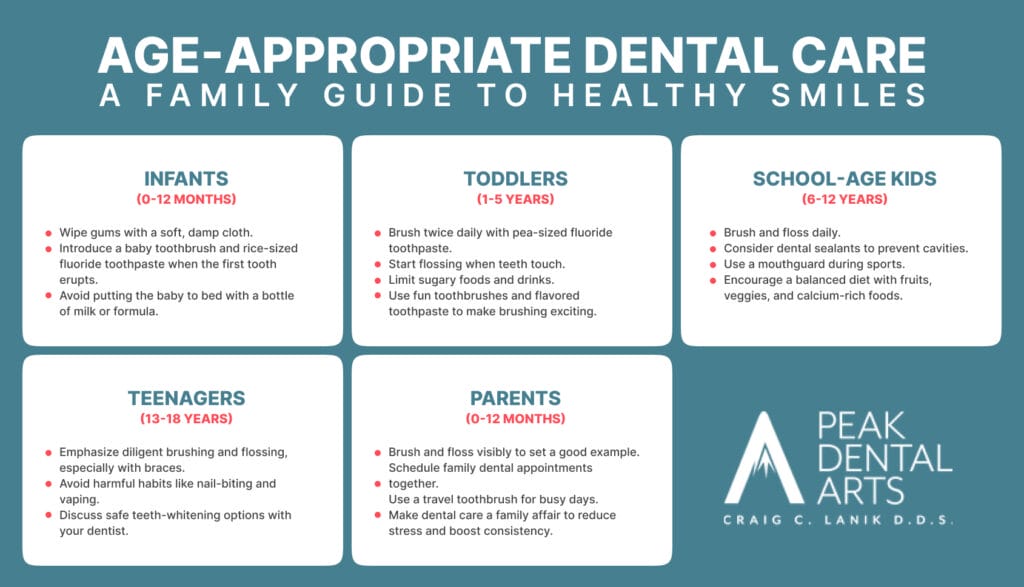
Dental Care for Infants (0-12 Months)
Infant dental care often gets overlooked, especially before teeth erupt. But early oral care lays the foundation for healthy teeth later on. In the first year, focus on keeping the mouth clean and starting dental habits.
When the first tooth appears, it’s time to begin brushing. Use a toothbrush designed for infants and a small smear of fluoride toothpaste, no larger than a grain of rice. Gently clean teeth twice each day.
Avoid letting babies fall asleep with bottles containing milk or formula. The sugars can linger on their teeth and cause early cavities, also known as baby bottle tooth decay. If a bottle is needed for comfort, stick to water.
Your child’s first dental check-up should happen by either their first birthday or within six months of the first tooth erupting. This exam allows early assessment of tooth and gum development and helps children get used to dental visits.
Dental Care for Toddlers and Preschoolers (1-5 Years)
By this age, children begin forming habits and routines. Their baby teeth play a role in chewing, speech, and holding space for adult teeth. Daily care combined with regular dental visits becomes essential.
Children at this stage need help brushing and flossing. Their motor skills are still developing, so adult supervision is necessary until at least age six.
Use a soft-bristled toothbrush and a pea-sized amount of fluoride toothpaste. They should begin flossing once their teeth start to touch.
Limit sugary snacks and juices. Frequent exposure to sugar increases the risk of decay. Instead, offer them water, fruits, and vegetables. Kids do love their sweets, however, and it may not be feasible to avoid them entirely. So, if they do want to enjoy some sweets, just be sure to have them brush their teeth soon afterward.
Regular check-ups every six months help track development and catch potential issues early. Fluoride varnishes or cleanings may be recommended depending on the child’s cavity risk.
Dental Care for School-Aged Children (6-12 Years)
These years mark a major shift as baby teeth fall out and permanent teeth come in. Continued parental support is important, especially as children take on more responsibility for their own brushing.
Use these dental care practices to support school-age children:
- Brush at least twice a day with fluoride toothpaste, focusing on all tooth surfaces. Some kids may still need reminders or supervision until they build consistent habits.
- Floss once a day to clean between teeth and along the gumline.
- Consider dental sealants to protect molars, which are prone to decay due to their deep grooves.
Children involved in sports should wear a mouthguard to help prevent injuries. Your dentist can recommend either a custom-fitted or over-the-counter option, depending on the activity and risk level.
A healthy diet supports strong teeth. Encourage fruits, vegetables, dairy products, and whole grains rather than processed snacks. Drinking water with meals helps reduce acid and rinse away food particles.
Dental Care for Teenagers (13-18 Years)
Teenagers need consistent reminders about daily routines, especially as social lives and school activities become more demanding. Independence can lead to missed brushing or poor choices, so reinforcing good habits remains necessary.
Here are key points for teen dental health:
- Teens with braces, retainers, or aligners must take extra time cleaning around brackets or appliances. Using a water flosser or orthodontic floss helps remove food and plaque.
- Discourage habits like biting nails or chewing ice or pens, which can damage teeth and orthodontic work.
- Talk openly about the effects of smoking, vaping, or tobacco use. These products increase the risk of gum disease, staining, and other oral health problems.
- Wisdom teeth often begin to emerge in the late teens. Regular cleanings and exams allow your dentist to monitor development and determine if removal is needed.
If your teen is interested in whitening products, speak to a dentist first. Whitening isn’t recommended until permanent teeth have fully matured.

Dental Care for Parents
In many families, parents focus on their children’s care while neglecting their own. Yet staying consistent with personal dental hygiene sets an example and prevents future health problems.
Every parent should brush morning and night and floss once daily. Regular dental check-ups every six months reduce the chance of long-term complications and help catch issues early.
Use these simple strategies to stay on track:
- Set dental appointments for the whole family on the same day. This creates a shared routine and minimizes skipped visits.
- Keep a travel-sized dental kit at work or in the car. It’s a practical way to care for your teeth even during busy days.
- Stick to a family nighttime routine that includes brushing and flossing. Children are more likely to follow through when they see parents doing the same thing.
Prioritizing adult dental care benefits the whole household. Children take cues from what they see, not just what they’re told.
Making Dental Care Part of Daily Life
Busy routines can make it easy to overlook dental hygiene, especially in a household with multiple schedules to manage. But building oral care into your family’s day doesn’t have to be complicated.
Try these practical approaches to make daily dental care easier and more consistent:
- Pair brushing and flossing with regular activities like getting dressed or bedtime stories. These routines serve as cues, helping children remember without being asked.
- Keep toothbrushes and floss in easy-to-reach areas. Organized storage—like a labeled bin for each family member—also helps prevent clutter in shared bathrooms.
- Prepare dental travel kits for school, sports events, or sleepovers. A small kit with a toothbrush, toothpaste, and floss makes it easy to stay on track away from home.
- Use simple checklists or visual charts for younger children. A weekly tracking sheet with stickers can help them take ownership of their routine while reminding them to brush and floss.
- Try brushing together. When kids see parents brushing and flossing consistently, they are more likely to follow those habits themselves.
Consistency becomes easier when routines are simple, visible, and reinforced by the rest of the family.
Related Article: Tips and Tricks to Get Kids Excited About Flossing
Common Things to Avoid
Even families with strong routines can fall into habits that undermine long-term oral health. Most problems are preventable with small adjustments along the way.
Here are some of the most common oral care mistakes and how to avoid them:
- Brushing too hard can wear down enamel and irritate gums. A soft-bristled toothbrush and gentle technique are more effective and safer.
- Skipping floss is a common issue—even for adults. Brushing alone doesn’t clean between teeth, where food and plaque often hide. Flossing daily is essential.
- Relying on mouthwash as a substitute for brushing and flossing doesn’t offer full protection. Mouthwash can reduce surface bacteria, but it won’t remove plaque or food debris.
- Letting children brush alone too early can lead to missed spots and plaque buildup. Most children need help brushing correctly until at least age six or seven.
- Delaying dental visits often results in more complicated, expensive problems. Keeping a regular schedule—generally every six months—helps catch small issues before they worsen.
Avoiding these mistakes helps keep your family’s dental health moving in the right direction—and reinforces the value of prevention at every age.
A Family Journey to Healthy Smiles
Oral health is a lifelong process. By adjusting routines to meet the needs of each developmental stage, families can prevent cavities, gum disease, and more serious complications. Long-term success depends on early habits, routine care, and shared responsibility.
These growing family dental care tips support healthy habits—from the first tooth to the teenage years. With planning, education, and routine dental visits, families can maintain strong, healthy smiles together.